TAILOR-PERSONALIZED SERVICE
From idea to finished product, in 6 steps


From idea to finished product, in 6 steps
Our Made-to-Measure products follow a careful production cycle, with each tailor specializing in a specific task. Workers cut, sew, and finish each product by hand. Modern technologies allow us to produce our garments in extremely fast turnaround times of between 3 and 7 weeks. We offer an express delivery service within 10 business days (approximately 2 weeks).
"Technology meets tradition. This is how a Niccolò E. Zaffarano® garment is born."
Let's explore together how a Niccolo E. Zaffarano® garment is born.
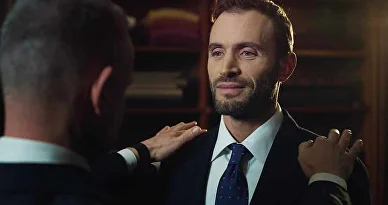
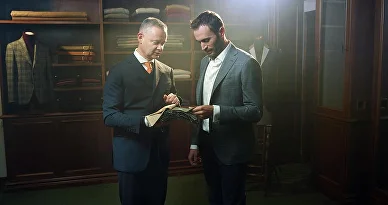
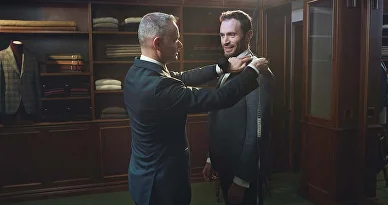
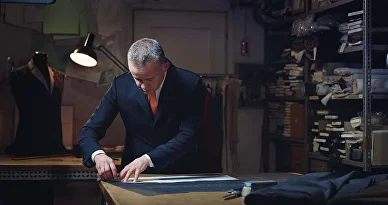
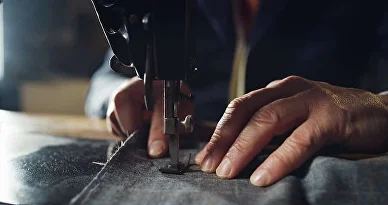


Nothing is left to chance.
Hand-finished suits
All of our dresses are made with up to 12 hand finishes, in addition to being fully sewn using innovative techniques.
We don't normally use glues or adhesives of any kind, except where absolutely necessary. Let's find out together:
The undercollar of a dress is located above the outer fabric and therefore requires a special and difficult zig-zag stitching to be attached. Although in most cases this is done by machine, in our handmade dresses the undercollar is finished by hand. This is a fine detail that ensures that the undercollar rests easily against the neck and shoulder line.

A unique hand-applied bartack shaped like a flower. It strengthens and decorates the point where the pockets meet the side seam, combining functionality with aesthetic detail.


The bottom of the jacket is cut and sewn by hand as is the small border of fabric on the inside of the bottom of the jacket where the lining and hem meet. Hand stitching allows more flexibility for the lining and reduces stress on the garment when using the pockets, giving the jacket more shape and durability.

There are two techniques for finishing the corner on the inside of the cuff. In the simpler version, the diagonal seam is visible and excess fabric is cut off, so lengthening the sleeve becomes difficult for a tailor. In our suits, the cuff is turned in and is finished with a hand-stitching. The pleat gives body to the sleeve cuff and allows the sleeve to be lengthened if desired in the future.
To keep the jacket lining in place, it is attached to the outer fabric at certain points. The armhole is one of these points. As you might imagine, a hand stitch is looser than a machine stitch and allows an experienced tailor to adjust the tension at each individual stitch. With this approach, hand finishing allows for more arm movement, almost as if the lining were elastic.

Handmade buttonholes are a thing of beauty. In the hands of an experienced tailor, they can really make a jacket stand out among others. A machine-made buttonhole takes only 5 seconds, while a handmade buttonhole takes even the best tailor about 10 minutes (1 hour in the case of "Milanese"). If sewn correctly, they add a level of detail you will be proud of.


Stitching is done with a single thread and needle, often to ensure that the inside seams do not turn on the edges of a jacket (such as the lapel or collar). Hand stitching is much more refined and visible than machine stitching. Hand given stitches give constructive richness and character to our garments. To emphasize even more, for those who wish, we can make a double row of hand-given stitches called "doppia impuntura".

The collar lap is a small piece of fabric that wraps around the undercollar of a jacket and is only visible when the collar is turned up. Although it’s not very common today and often goes unnoticed, it’s a subtle detail that reflects the quality of a well-made suit. Its purpose is to slightly adjust the angle of the collar and to hide the contrasting undercollar. The collar edge is finished with fine, handmade cross stitches.
A chest pocket on a handmade jacket is a real eye-catcher. A handmade pocket almost seems to float on the fabric, without any visible stitches; in fact, it is called a "boat" pocket, or slightly round as if to resemble the bow of a ship. The stitches are so fine that they are hidden under the edges of the pocket.

Our shoulders are attached (and possibly pleated upon request) by hand, as is the lining of all sleeves and cuffs are attached to completely by hand.


A joist is a stitch used to reinforce vulnerable points in a garment. In places where the fabric is subject to wear and tear, a joist is sewn to protect the area. This is a small detail that, if done by hand, will distinguish your jacket from those with machine stitching.

To truly emphasize the beauty of a label, it should be hand-attached. Cross stitches where the edges of the label are attached to the lining accentuate the sartorial prestige of the jacket and the label.

Shirts so pretty you'll never want to take them off.
Our shirts are also manufactured to the highest quality standards, with 10 handmade steps:
Buttons were hand-attached in all our shirts. Why? Look at the back of our button attachment: it is the cleanest finish you can find around. No machine can imitate it. Also, our buttons have a shank, which can only be done by wrapping it by hand. The shank makes it easier to fasten the button and strengthens its attachment and durability.

Handmade buttonholes are a thing of beauty. In the hands of a skilled tailor, they can really make one shirt stand out among others. A machine-made buttonhole takes only 5 seconds, while a handmade buttonhole takes even the best tailor about 10 minutes. If sewn correctly, they add a level of detail you will be proud of.


The hand-rolled hem: one of the most beautiful details of a handmade shirt for the connoisseur. Instead of folding the hem twice and sewing it by machine, this hem is gently rolled by hand and sewn loosely to finish the shirt in style.

This small bartack is located on the upper edge of the sleeve slit ("fessino" in italian). In addition to being a sign of high quality of the handmade shirt, thisbartack serves to reinforce the slit to prevent it from tearing.
A handmade side seam gusset resembles a small cushion on the side of the shirt, it's also called "mouche," is a beautiful detail found only on handmade tailored shirts. It ensures that the side seam will not tear if it gets stuck during a movement.
To truly emphasize the beauty of a label, it should be hand-attached. Cross stitches where the edges of a label are attached to the fabric accentuate the sartorial prestige of the shirt and the label.


The shoulders are sewn (and pleated) by hand, and the sleeve is fitted "asymmetrically," a sartorial detail that allows for the most comfortable movement possible.

Even the front placket is turned up and stitched completely by hand, a detail that no shirting company makes anymore.
The collar seam is hand stitched to give comfort and softness to our collars. Our shirts come with removable neck splints.

Even the cuffs are folded and stitched by hand to complete our state-of-the-art shirt.
If necessary, it is possible to reduce the number of steps performed by hand upon request, in order to obtain a product faster and more in line with individual needs, but without altering our quality-price ratio.
